
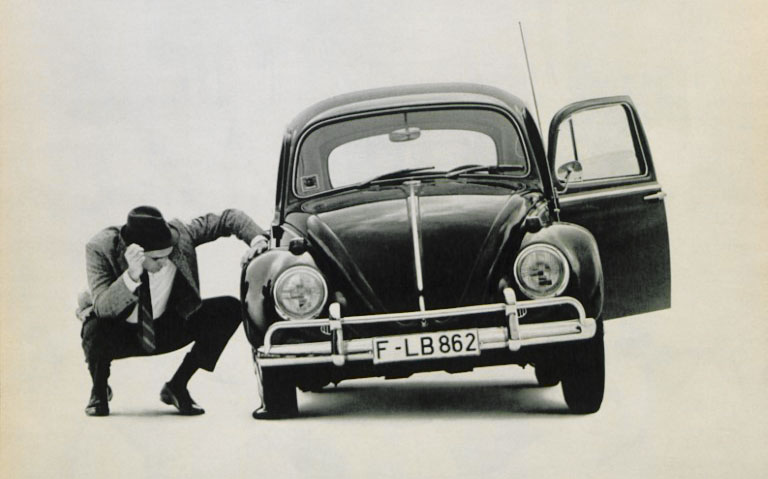
The advertising history of the VW Beetle
BEETLE – PROMOTION – CULT
A symbol of economic advancement, a benchmark in industrial production, a global trademark, sold in millions – and at the same time classless, reliable and incomparably likeable. With the VW Beetle, Ferdinand Porsche and his team successfully created a symbol of a certain lifestyle and period, which also became an important part of popular culture. Advertising played a major part in this.
Before the Second World War, the marketing and advertising strategy was still very modest – the company was in development and concentrating on production of the People’s Car. Nonetheless, an initial advertising brochure was issued in 1937, highlighting the advantages, reliability, economy and robustness. One of the earliest known advertisements for the People’s Car dates from 1938. The advertisement shows a Beetle in a simple design with the slogan “a car for everyone”.
It was only in the 1950s that Volkswagen increasingly used targeted marketing and advertising to establish the Beetle on the market. During this period, advertising graphic designer and creative director Bernd Reuters played a significant part in the development and implementation of some of Germany’s most famous advertising campaigns, including the advertising of the Volkswagen Beetle. The large, fold-out Beetle prospectus of 1951 with parchment paper was Reuters’ first work for VW.
However, a number of unconventional ideas were required, in order to be able to compete on the large USA car market. In 1959, the then President of “Volkswagen of America”, Carl H. Hahn, and his right-hand man, Helmut Schmitz, commissioned still unknown advertising agency Doyle, Dane, Bernbach (DDB) for a creative campaign that stood out from the competition. The agency positioned Volkswagen in the USA as a sort of protest symbol against the commonness of the big status symbols from Detroit. The campaign used minimalist advertisements with clever texts that staged the little car as a likeable outsider compared with the big, showy, American vehicles. The VW Beetle became a cult for all Americans who were deliberately opposed to excessive consumption. The slogan was: “Think small.”
Helmut Schmitz returned to Wolfsburg in 1963 as Advertising Manager and brought with him this American advertising philosophy. A bit of understatement and self-deprecation therefore also became characteristic of the German Beetle advertising. The real or subjectively perceived weaknesses of the product were highlighted, in order to present these supposed disadvantages as advantages in the overall concept. The advertising aimed to give the Volkswagen an image of honesty, reliability, quality and self-confidence.
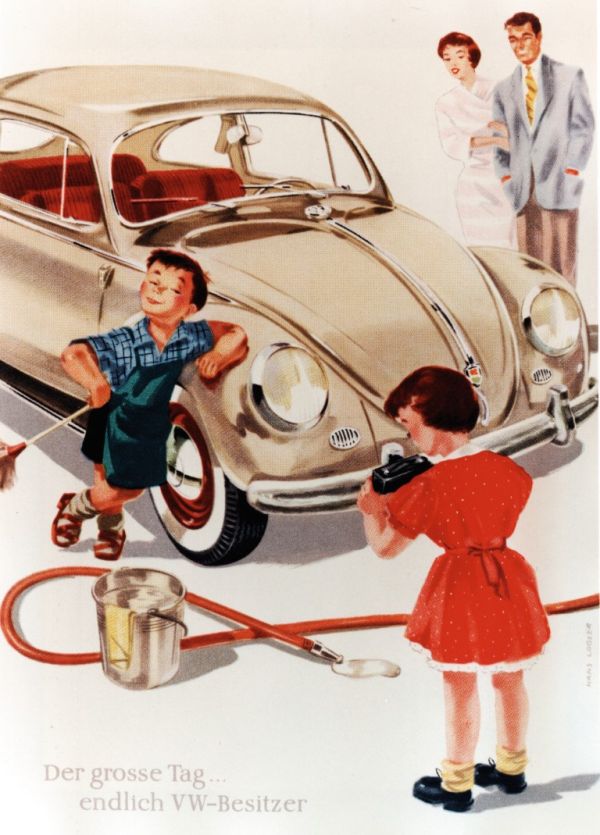
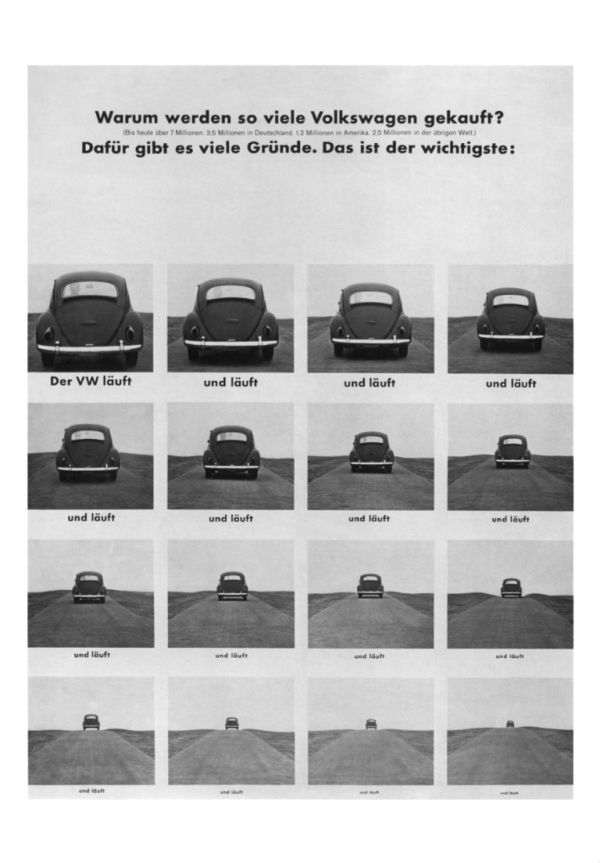
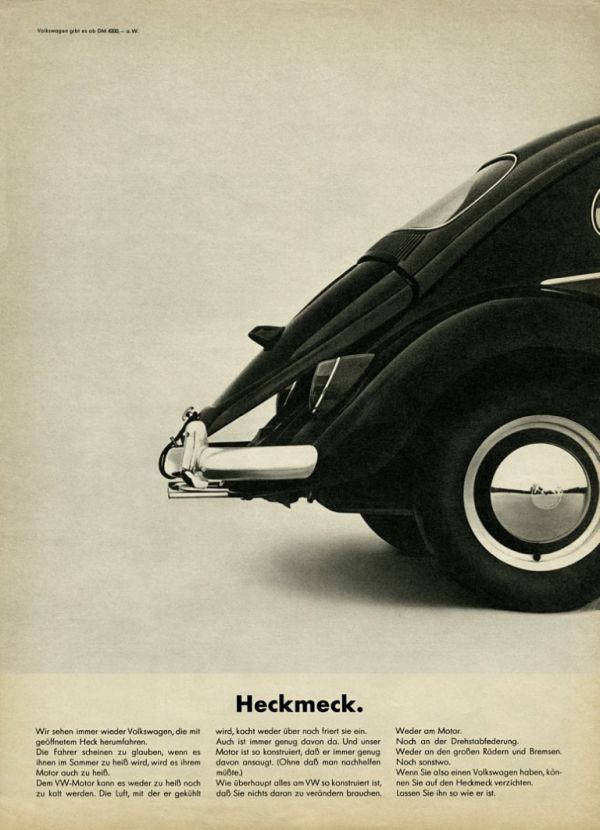
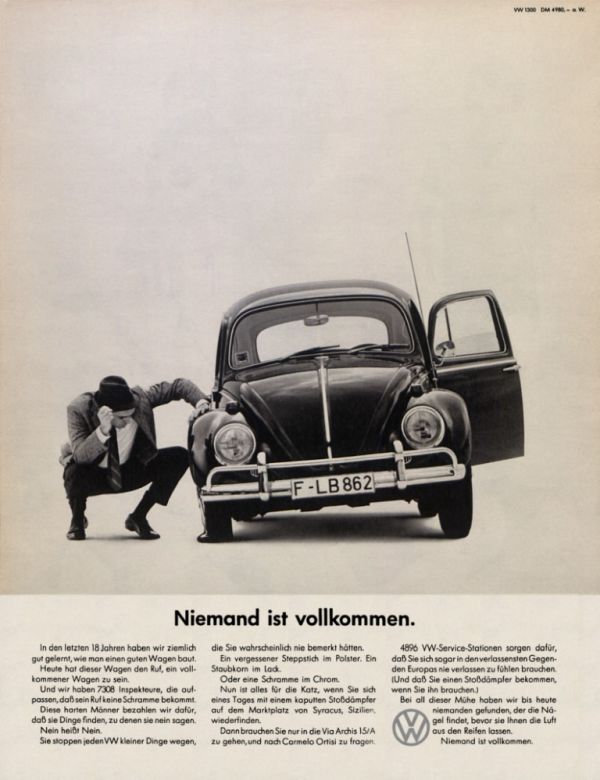
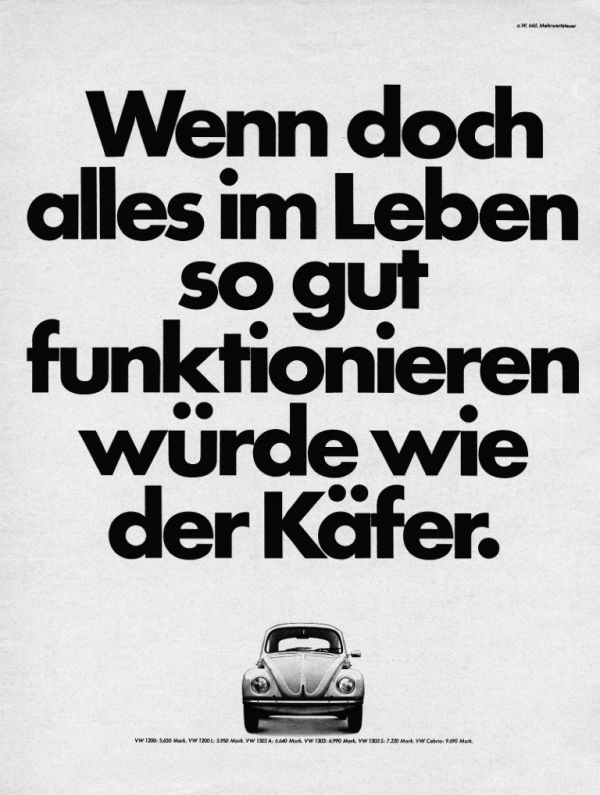
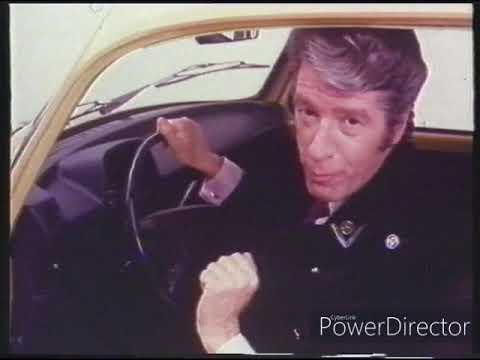
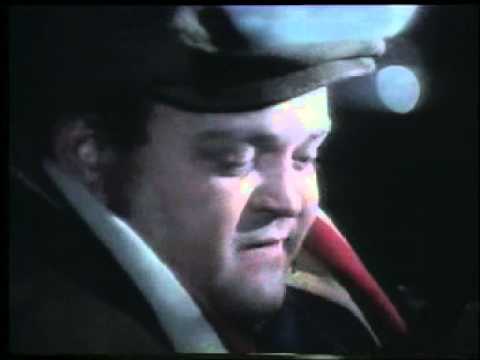
In the 1970s, Volkswagen increasingly used TV advertising to boost sales figures further.
Wczytując film, wyrażasz zgodę na politykę prywatności firmy YouTube.
Dowiedz się więcej
Wczytując film, wyrażasz zgodę na politykę prywatności firmy YouTube.
Dowiedz się więcej
Production of the Beetle was discontinued in the 1980s, but the legendary advertising campaigns live on to this day and they contributed significantly to the Beetle becoming a cult car.
Sources
fahr(T)raum Archiv
Archiv Volkswagen AG, Wolfsburg
Bernd Wiersch, Die Käfer Chronik, Delius Klasing Verlag, 2007
Das Automobil des vernünftigen Fortschritts – Bernd Reuters, VW-Prospekt – Volkswagenwerk;
This might also interest you:




“4 months of work have paid off” – VW beetle cutaway model is finished
/w Bez kategorii, Motoren, Sonstige Fahrzeuge, VW KäferIf you ever wanted to take a closer look at the engine and gearbox of a VW beetle, then fahr(T)raum Mattsee is the place for you. The VW Beetle cutaway model, which has been time-consumingly restored by hand in the Erlebniswelten fahr(T)raum workshop, is now finished and can be seen in the exhibition. The rare […]