
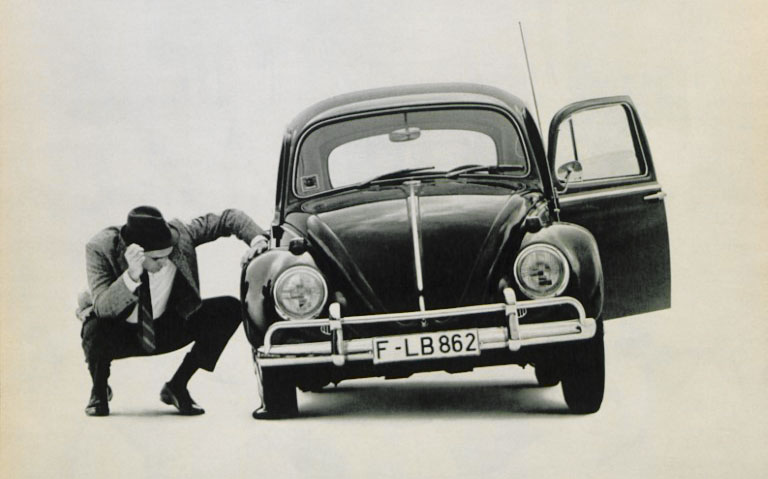
The advertising history of the VW Beetle
BEETLE – PROMOTION – CULT
A symbol of economic advancement, a benchmark in industrial production, a global trademark, sold in millions – and at the same time classless, reliable and incomparably likeable. With the VW Beetle, Ferdinand Porsche and his team successfully created a symbol of a certain lifestyle and period, which also became an important part of popular culture. Advertising played a major part in this.
Think Small: How Legendary VW Beetle Advertising Created a Cult Classic
How does a small, quirky car from Germany conquer the land of oversized, chrome-finned giants? It doesn’t just happen. It takes a revolution.
The Volkswagen Beetle is more than just a car. It’s a symbol of a generation, a pop culture icon, and a testament to the power of brilliant advertising. While Ferdinand Porsche’s engineering was genius, it was the groundbreaking marketing, particularly in the United States, that cemented the Beetle’s place in our hearts.
Let’s explore the advertising history that drove the Beetle from a “people’s car” to a global phenomenon.
Early Days: A Car for Everyone
Before World War II, the Beetle (then known as the KdF-Wagen) had modest marketing. Early brochures from the late 1930s focused on the car’s core principles: reliability, economy, and robustness. A 1938 advertisement presented a simple illustration with an equally simple slogan: “A car for everyone.” The focus was on utility, not personality.
After the war, the task of rebuilding began. In Germany, talented graphic designer Bernd Reuters helped shape the Beetle’s image in the 1950s with elegant, beautifully illustrated prospectuses that began to give the car a touch of class and desirability.
The American Revolution: DDB and the “Think Small” Campaign
The real challenge was America. In the late 1950s, the US market was dominated by Detroit’s massive, gas-guzzling status symbols. The Beetle was the complete opposite: small, strange-looking, and efficient. How could it possibly compete?
In 1959, the president of “Volkswagen of America,” Carl H. Hahn, made a decision that would change advertising forever. He hired a relatively unknown New York agency: Doyle, Dane, Bernbach (DDB). Instead of trying to make the Beetle look like an American car, DDB leaned into its differences. They positioned the VW Beetle as the intelligent alternative—a protest against the excessive consumption of the era. The result was a campaign that broke every rule in the book.
The Power of Honesty: Key Elements of the “Think Small” Era
The DDB campaign was built on a foundation of wit, minimalism, and brutal honesty. This was unheard of at the time. Their philosophy was simple: treat the consumer like they have a brain.
Key characteristics of these legendary ads included:
- Minimalist Design: Most ads featured a stark, white background with a small picture of the car, forcing the reader to focus on the vehicle and the headline.
- Witty, Self-Deprecating Headlines: The copy was the star. Headlines like “Think small.” and “It’s ugly, but it gets you there” were clever, charming, and disarming.
- Honesty as a Selling Point: The most famous example is the “Lemon” ad. It showed a Beetle with a headline declaring it a lemon because of a tiny, barely visible cosmetic flaw on the glovebox. The message? VW’s quality control was so ridiculously high that they rejected cars for imperfections other manufacturers wouldn’t even notice. This built immense trust and an image of superior quality.
This campaign turned the Beetle’s perceived weaknesses into its greatest strengths. It was small, so it used less gas and was easy to park. It was simple, so it was reliable and cheap to fix. It didn’t change its look every year, so it never went out of style. The Beetle became the official car for anyone who valued substance over flash.
The Beetle’s Witty Return to Germany
The American strategy was so successful that in 1963, advertising manager Helmut Schmitz brought the DDB philosophy back to Germany. The German ads adopted the same self-deprecation and intelligence. They openly discussed the car’s loud engine or unchanging design, framing these “flaws” as proof of the car’s honest-to-goodness character and reliability.
This approach gave Volkswagen an unparalleled image of honesty, quality, and self-confidence in its home market.
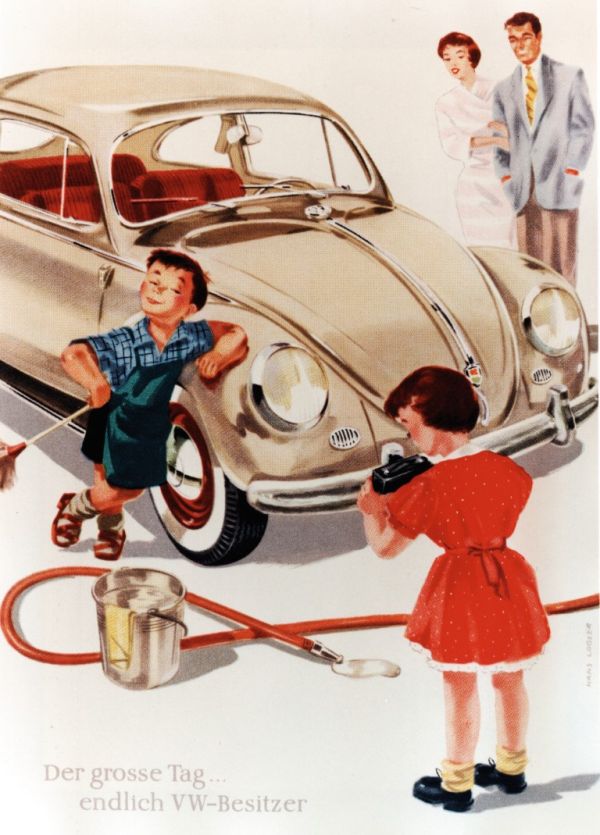
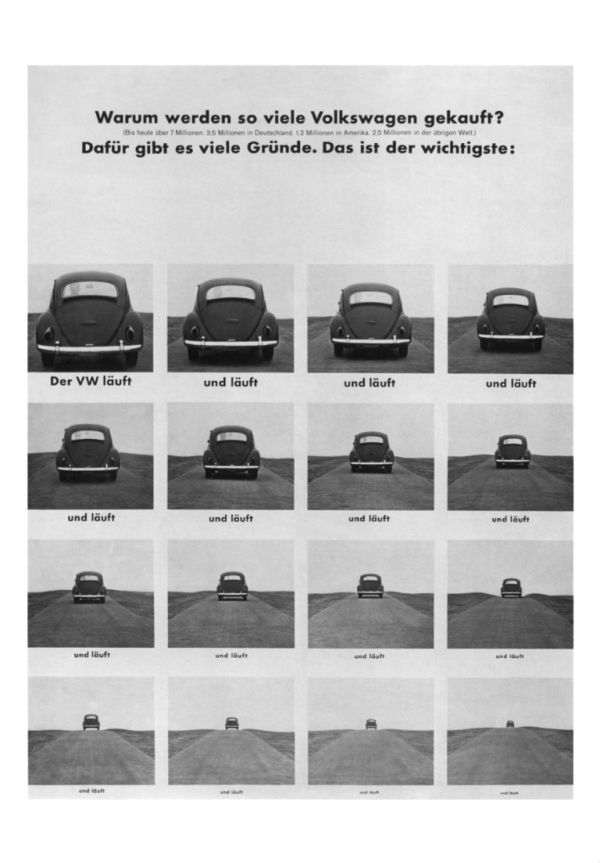
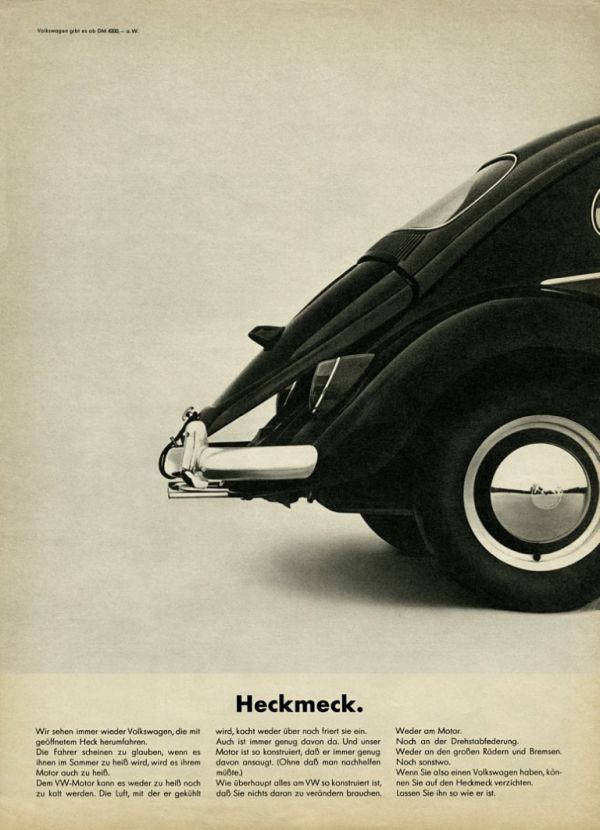
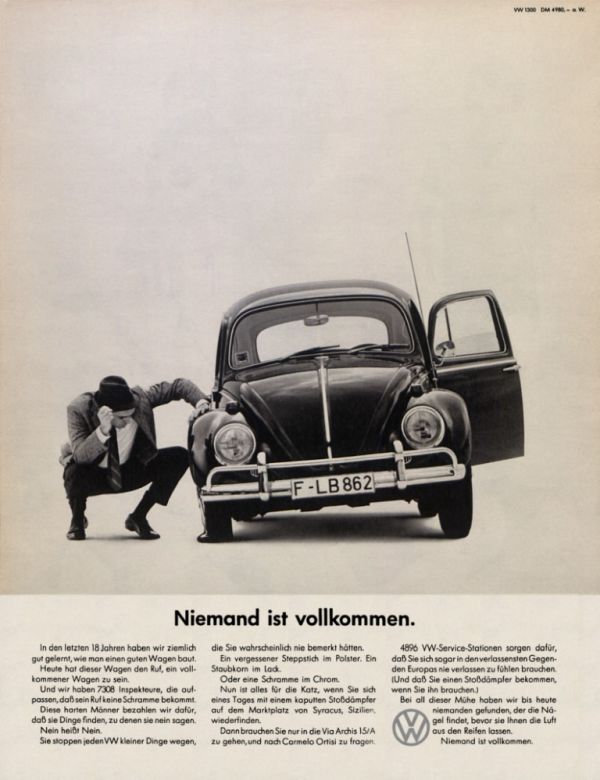
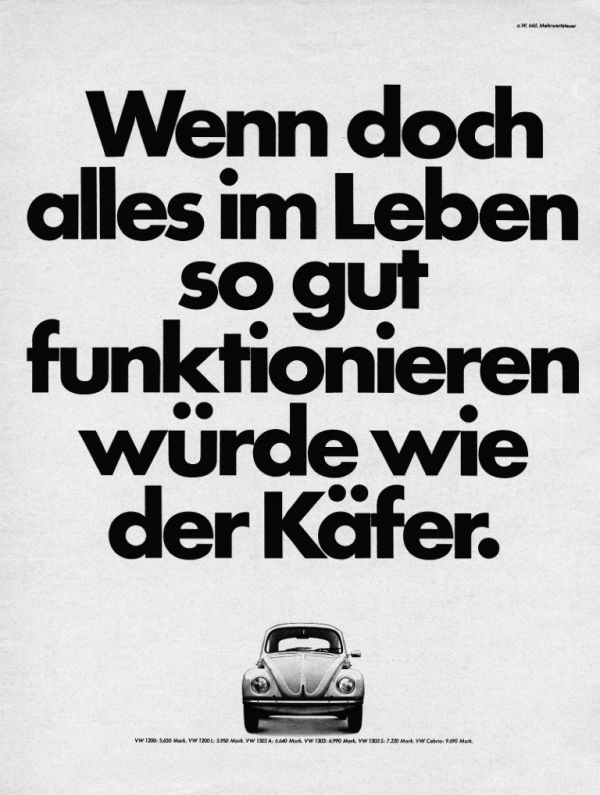
In the 1970s, Volkswagen increasingly used TV advertising to boost sales figures further.
Production of the original Beetle eventually ceased, but its advertising legacy is as strong as ever. The campaigns by DDB are still taught in marketing courses as the gold standard for brand building.
They proved that you don’t need to shout the loudest to be heard. Sometimes, all you need to do is think small. The VW Beetle wasn’t just sold as a car; it was sold as an idea. And that’s why it became a timeless cult classic.
Experience the Legacy Firsthand in Austria
Reading about history is one thing, but seeing it up close is another. To dive deeper into the world of Ferdinand Porsche and the evolution of his creations, you can visit the Fahr(T)raum experience world in Mattsee, Austria. There, you can explore a stunning collection of historical vehicles and even see an exhibition featuring many incredibly rare models of the Beetle, bringing this rich history to life right before your eyes.
Sources
fahr(T)raum Archiv
Archiv Volkswagen AG, Wolfsburg
Bernd Wiersch, Die Käfer Chronik, Delius Klasing Verlag, 2007
Das Automobil des vernünftigen Fortschritts – Bernd Reuters, VW-Prospekt – Volkswagenwerk;
This might also interest you:




Celebrate the Icon: Why June 22nd is the International Day of the VW Beetle!
/in Geschichte, Non categorizzato, VW KäferThe Volkswagen Beetle: a car that’s more than just metal and mechanics. It’s a symbol of freedom, innovation, and a quirky charm that has captured hearts worldwide for generations. But did you know this automotive legend has its very own international day of recognition? Mark your calendars for June 22nd, the International Day of the […]
The “Original Beetle” at fahr(T)raum Mattsee – a KdF car from the year 1942
/in Geschichte, Non categorizzato, VW KäferFerdinand Porsche laid the cornerstone for the success story of a car that has been known throughout the world for more than half a century. On behalf of RDA (Reichsverband der Automobilindustrie [imperial association of the automotive industry]), he developed the first, long anticipated car for the people of Germany, the Volkswagen. Back then still […]
A Time Capsule on Wheels: Unrestored 1952 VW Pretzel Beetle at fahr(T)raum
/in Non categorizzato, Sonstige Fahrzeuge, VW KäferThe Ferdinand Porsche Worlds of Experience, fahr(T)raum in Mattsee, has been enhanced by an automotive sensation: a 1952 VW Beetle with 25 hp, in its completely original, unrestored condition. Such a vehicle is an absolute rarity among collectors today and offers visitors the unique opportunity to experience authentic automotive history up close. Why is the […]